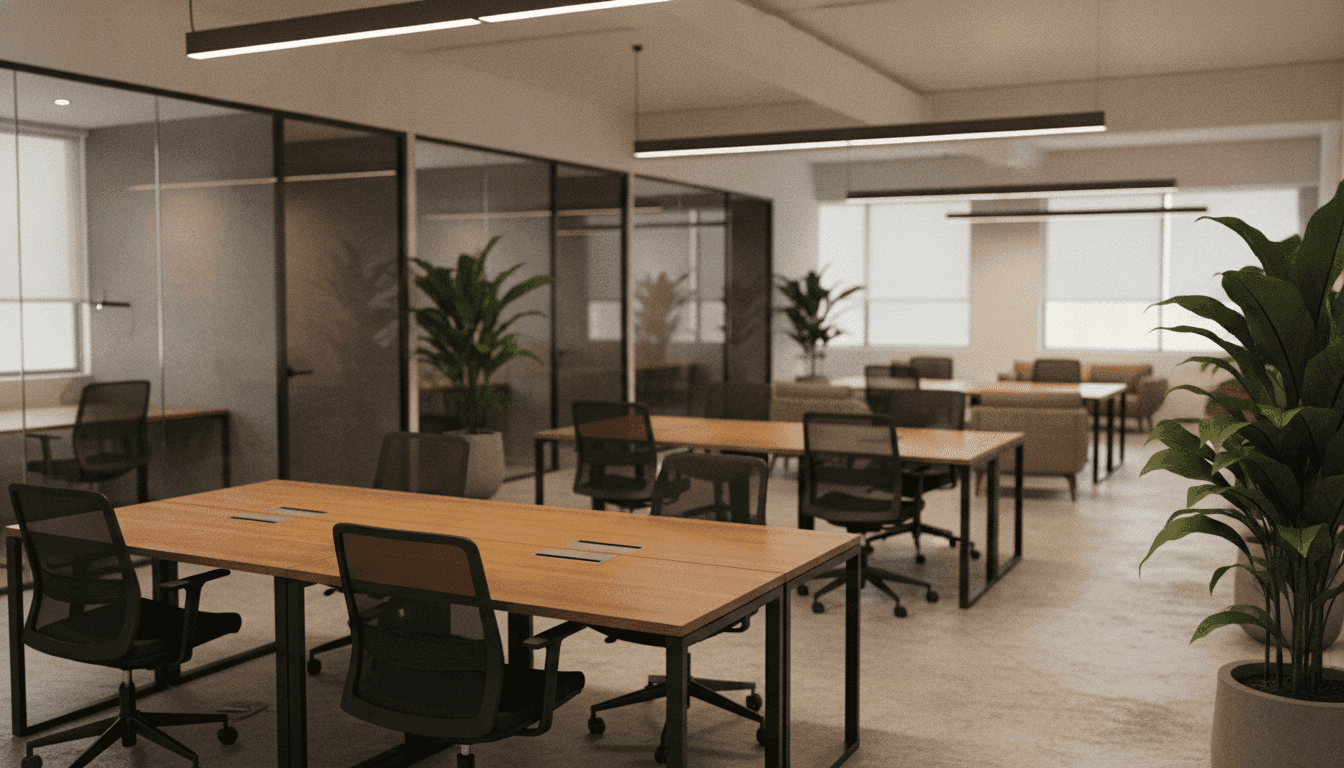

A managed office in India provides a fully customized, turnkey workspace delivered and operated by a third-party provider under a single monthly operational charge. In contrast, a traditional commercial office lease involves renting bare-shell or warm-shell real estate directly from a landlord, placing full operational and financial responsibility for interior fit-outs, vendor management, and long-term facility maintenance on the tenant.
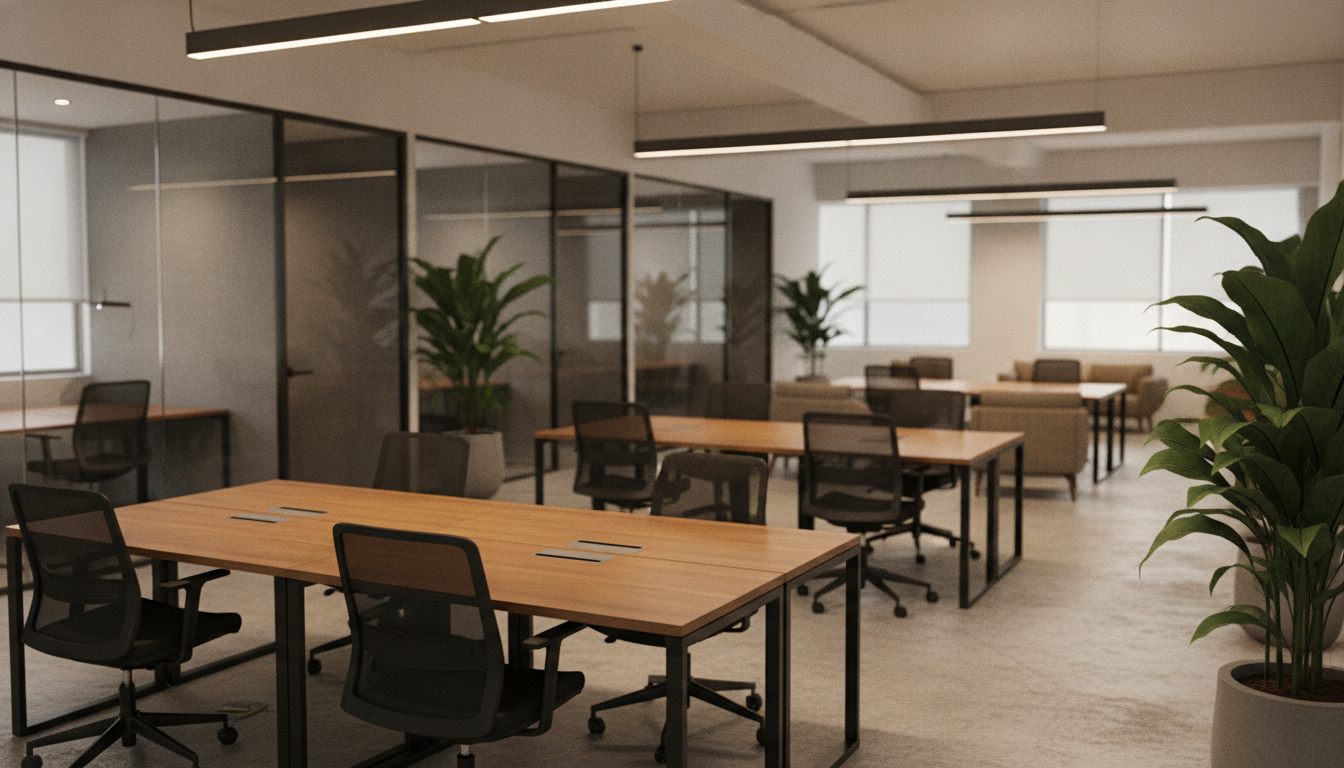
1. Comparing upfront capital expenditure and daily operational costs
The financial structures of managed office spaces and traditional office leases differ fundamentally in how capital spending is handled. Signing a traditional commercial real estate lease in India requires substantial initial capital outlay. Tenants must fund bare-shell fit-outs, architectural layout planning, electrical wiring, HVAC installations, plumbing, flooring, office furniture, access control systems, and network cabling. In major commercial districts, these capital fit-out costs consume a significant portion of a company's financial reserves before the workspace becomes usable.
Managed office solutions convert these heavy capital expenditures into predictable operational expenses. Under a managed office model, the workspace provider handles interior construction, workspace design, furniture procurement, and technology installation according to the client's specifications. The costs are bundled into a transparent recurring monthly fee per seat or square foot. This arrangement allows organizations to preserve capital for core business expansion, product development, and talent hiring rather than tying up liquidity in non-recoverable interior assets.
Daily administrative management represents another major point of divergence. With a traditional lease, the tenant must manage multiple third-party suppliers, including property maintenance staff, security personnel, internet service providers, cleaning services, and equipment technicians. Managing these vendor contracts requires dedicated internal facilities teams. Managed office providers remove this burden by consolidating facility management, high-speed internet, security, maintenance, and utilities into one comprehensive operational service.
2. Evaluating lease flexibility, lock-in periods, and scalability
Lease commitments and contract terms distinguish managed office spaces from traditional commercial property agreements in India. Traditional commercial lease contracts typically demand multi-year commitments, often structured as three-year to nine-year agreements with rigid lock-in periods ranging from three to five years. Landlords also require interest-free security deposits, often equal to three to six months of rent. If a business needs to downsize or change locations during a lock-in period, early exit penalties can be heavy.
Managed office spaces offer operational flexibility designed for shifting market conditions. Managed office contracts feature adaptable tenure terms and scalable seat options, enabling businesses to expand or adjust their footprint as team sizes change. This agility is especially valuable for enterprise satellite divisions, technology firms, and Global Capability Centers expanding across primary commercial markets.
For organizations growing across multiple regions, workspace operators provide ready infrastructure in key metro areas. Urban Vault operates a network of over 75 locations comprising 2.5 million square feet of workspace across Bengaluru, Pune, Gurgaon, Mumbai, Hyderabad, and Chennai. This established footprint allows growing companies to set up fully managed offices rapidly without navigating complex property acquisitions in every city.
3. Key operational differences between managed and traditional offices
Evaluating how these two models compare across operational and technical parameters helps organizations choose the right space for their workflow. The table below outlines the primary distinctions between managed office spaces and traditional commercial leases.
| Feature | Managed Office Space | Traditional Commercial Lease |
|---|---|---|
| Financial Structure | Operational Expenditure (OpEx) | Capital Expenditure (CapEx) + OpEx |
| Interior Fit-outs | Designed and constructed by operator | Funded and managed by tenant |
| Setup Timeline | Immediate to 60 days for custom builds | 4 to 9 months for fit-outs and approvals |
| Vendor Management | Single point of contact via operator | Multiple independent vendor contracts |
| Lease Flexibility | Scalable seat counts and flexible terms | Fixed square footage with multi-year lock-ins |
| Security Deposit | Lower security deposit commitments | Substantial (typically 3 to 6 months of rent) |
Occupancy timelines also differ significantly between these options. Finalizing a traditional commercial lease requires property searches, legal negotiations, municipal permits, architectural approvals, contractor procurement, and interior build-outs, a workflow that frequently takes four to nine months. A managed office reduces this timeline to a few weeks or months because core building systems, layout infrastructure, and compliance approvals are already managed by the workspace operator.
4. Selecting the right workspace model for your organization
Choosing between a managed office and a traditional lease depends on your firm's administrative capabilities, growth plans, and financial priorities. Decision-makers should weigh their immediate space requirements against long-term real estate goals.
- Choose a traditional office lease if your enterprise requires permanent long-term headquarters ownership, specialized physical structural modifications, and has dedicated internal facility management teams to handle daily operations.
- Choose a managed office space if your company needs rapid market deployment, predictable monthly billing, custom interior layouts without heavy capital deployment, and flexibility to scale seat count as headcount evolves.
- Consider a hybrid approach when launching regional satellite offices, specialized tech hubs, or project-specific team bases in major commercial technology corridors.
For businesses seeking turnkey environments without real estate management overhead, Urban Vault provides customized private cabins, enterprise floors, and fully managed office spaces starting from Rs 5,999 per seat. With more than 50,000 managed seats across Bengaluru, Pune, Gurgaon, Mumbai, Hyderabad, and Chennai, Urban Vault supports growing companies, enterprise teams, and Global Capability Centers with scalable workspace solutions.
Frequently asked questions
What is the primary difference between a managed office and a traditional lease?
A managed office is a turnkey workspace solution provided under a single monthly operational fee, with interior design, utilities, and facility administration managed by the operator. A traditional office lease requires renting raw commercial space where the tenant funds initial construction fit-outs and manages ongoing facility maintenance.
Can a company customize the layout and branding of a managed office space?
Yes, managed office providers design interior configurations, seating layouts, meeting rooms, and corporate branding details according to the client's specifications prior to move-in.
How do lock-in terms differ between traditional commercial leases and managed offices in India?
Traditional commercial leases in India generally require lock-in periods of three to five years within long-term agreements, accompanied by substantial security deposits. Managed office spaces offer more flexible agreement terms and scalable seat arrangements tailored to company growth.


